Climate-related Risks and Opportunities (TCFD)
In the context of intensified global climate change situations and strong awareness of sustainability, the Company’s ability to cope with environmental impacts and transition pressures have become a core issue of stakeholder concern. The CCL industry plays a critical role in the electronics industry's upstream materials supply chain. Since it is an energy-intensive and carbon-intensive industry, companies with most of their production bases set in Taiwan and Mainland China must pay more attention to the financial and operational challenges posed by climate risks. In response to this trend, EMC has introduced the Task Force on Climate-related Financial Disclosures (TCFD) framework to systematically identify, assess and disclose the risks and opportunities brought about by climate change. Using the TCFD framework, EMC evaluates the potential impacts of climate change on its operational and financial performance from four perspectives―governance, strategy, risk management, and metrics and targets―and develops adaptation and mitigation measures based on the analysis results. EMC also analyzes the benefits brought by relevant practices for corporate sustainability transition and its connection with the global market to help it carry out financial management of climate risks and enhance the organization’s resilience and sustainable competitiveness. EMC’s climate change analysis focuses on the physical impacts on its plants in Taiwan, with secondary attention given to it plants located in other countries. The analysis encompasses the major physical disaster types that are of concern to stakeholders, such as high temperature, drought, and flooding. On this basis, EMC develops adaptation plans to respond to future impacts. It is hoped that with the introduction of the TCFD framework, EMC’s commitment to climate issues can be manifested, and it can proactively respond to the trend of sustainable global supply chain management under climate change challenges.
Governance
|
Item |
Company’s Management Actions |
Content |
Actions Taken in 2024 |
|
Governance |
Board Supervision |
The Board of directors is the highest governance body on climate issues, which supervises and decides on relevant affairs. The Corporate Sustainable Development Committee regularly reports to the Board of directors on the implementation progress of tasks related to climate change issues. The Corporate Sustainable Development Committee consists of three directors. The Committee is chaired by Chairman Ding-Yu Dong, with independent directors Duen-Chian Cheng and Hsi-Chia Chen serving as committee members. One of the Committee’s main responsibilities include promoting, developing, and supervising climate related tasks resolved by the Board of Directors. |
The Corporate Sustainable Development Committee regularly discusses EMC’s core climate risks and corresponding response strategies and reports to the Board of Directors at least once a year on the CSR implementation status of climate change- related issues. This helps the Board understand the Company’s climate-related risks, make decision on relevant management policies, and oversee their implementation. |
|
Managerial Personnel’s Roles and Responsibilities |
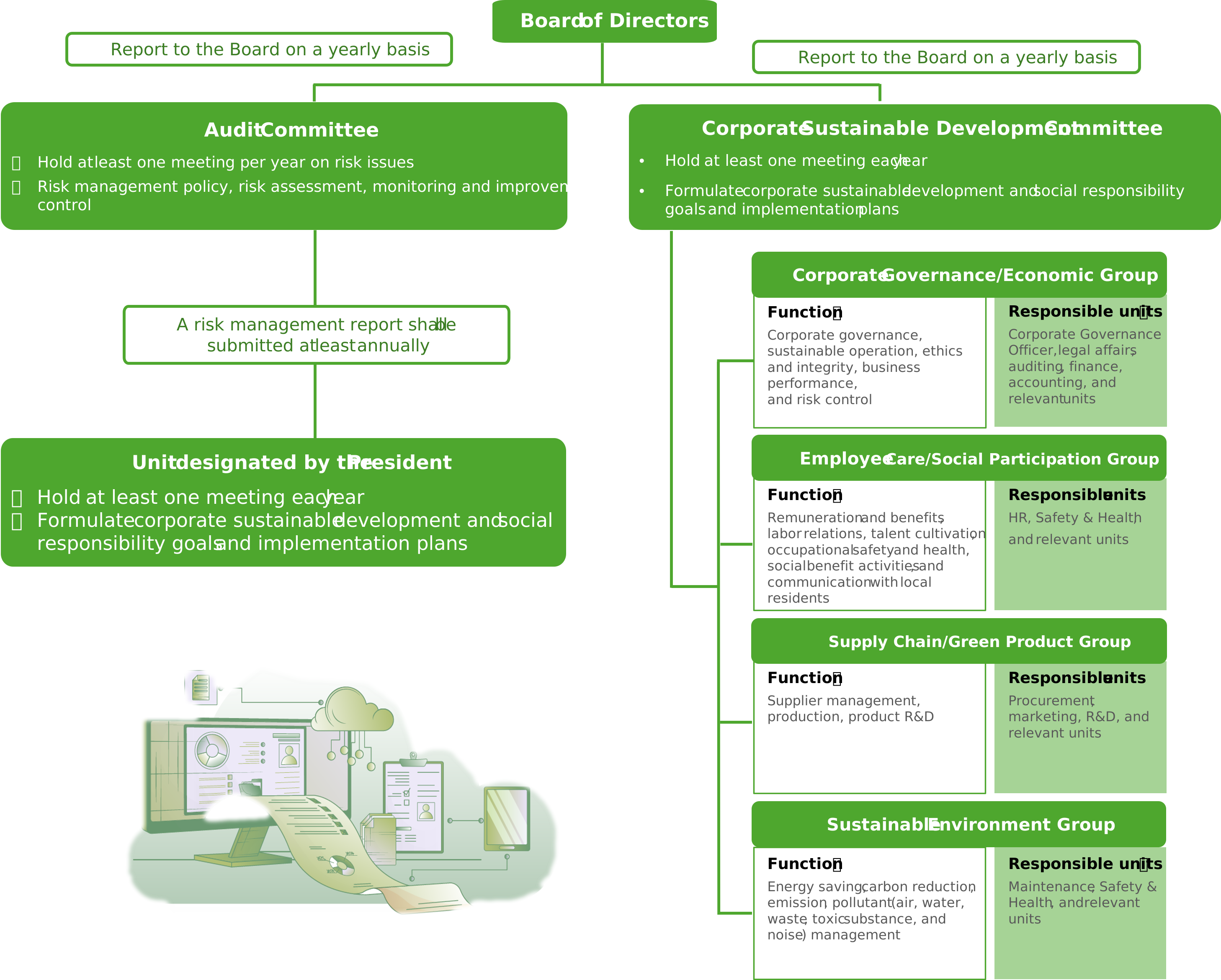
Four ESG groups have been established under the Corporate Sustainable Development Committee: the Corporate Governance and Economic Group, Supply Chain/Green Product Group, Employee Care and Social Engagement Group, and Sustainable Environment Group. The groups are formed by heads of relevant units and departments or their representatives, and are responsible for assessing and managing climate-related risks and opportunities, and implementing TCFD-related tasks. The Manager of the Chairman’s Office serves as the representative of the ESG groups and reports to the Corporate Sustainable Development Committee at least once a year. |
Since climate change involves a wide range of issues, EMC has implemented the TCFD framework to fully understand the impacts of climate-related risks on corporate operations and development, as well as the opportunities they may create. Under this framework, EMC designates ESG groups to conduct interdepartmental discussions and communication and carry out at least one assessment of operational impacts and the likelihood of risk occurrence per year. This enables the Company identify material risks and opportunities and develop mitigation or adaptation strategies. |
【Climate Governance Framework】
Strategies
EMC’s Taiwan plants analyze the major climate risks and opportunities of stakeholders’ concern, enabling EMC to develop adaptation plans in response to future impacts. For EMC, physical disasters (including natural disasters such as typhoons and floods) are the greatest source of climate risk related operational impacts, and the aspect most vulnerable to impacts is production capacity. Nevertheless, the impacts may create opportunities; for example, customers’ demand for green products may increase, which will facilitate EMC’s collaboration with customers and help enhance its R&D and innovation capabilities. Therefore, EMC invests resources in developing green products that are increasingly in demand due to climate change issues. As for the upstream supply chain, climate change risks may bring natural disasters and affect suppliers’ normal operations. Therefore, EMC will require suppliers to have flexible delivery capabilities, provide multiple shipping point options, or have adaptable delivery solutions. The Company will also continue to reinforce management measures to maintain sustainable supply chains.
Impacts of climate-related risks and response plans:
|
Risk Category |
Risk Dimension |
Risk Content (Risk Factor) |
Duration of Impact |
Impact of the Risk on the Company’s Strategies, Operations, and Finance |
Response Strategies and Plans |
Financial Impacts and Effects of Response Plans |
||
|
Short-term: Less than 3 years |
Medium term: 3–5 years |
Long-term: Longer than 5 years |
||||||
|
Physical Risk |
Immediate Risk |
Natural disasters (such as typhoons and floods) |
Short term |
n The occurrence of natural disasters may damage machinery, equipment, or public facilities and increase machinery/equipment anomaly incidence or operating costs. n The company pays employees double their regular rate and extra transportation or fuel allowances for working during typhoon days, which will increase operating costs. |
Consult natural disaster emergency plans to determine thresholds for emergency response activation and corresponding emergency response actions. Modify emergency response procedure documents pertaining to various natural disaster scenarios affecting the Company’s surrounding areas to effectively reduce the likelihood of equipment/facilities damage and operational interruption. |
No losses from natural disasters occurred in 2024. |
||
|
Physical Risk |
Long-term Risk |
Abnormal temperature and air pressure changes |
|
|
Long term |
Abnormal temperature and air pressure changes may lead to equipment overload and increased machinery/ equipment anomaly incidence. To counter these effects, additional air conditioning systems/facilities may be required, which will lead to increased electricity consumption and operating costs. |
Conduct energy diagnosis and replace outdated, energy consuming process systems and air-conditioning system machines with energy-efficient models. |
By applying carbon reduction projects, such as replacing old motors and adding variable frequency drives to compressor zone pumps, 2,219,390 kWh of electricity was saved in 2024. |
|
Transition Risk |
Policy and Regulations |
Increased GHG emission costs (such as carbon fees, carbon credits, etc.) |
Medium term |
Local governments may require the Company’s business units to meet various carbon reduction requirements. For example, Taiwan has imposed carbon fees on major carbon emitters. It is likely that the Company or its suppliers will be charged carbon fees or that operating costs may increase in the future. |
n Set EMC Group’s carbon reduction targets and require business units to proactively reduce carbon emissions, and explore green energy sources such as renewable energy. n Follow ISO 14064-1:2018 standards to conduct GHG inventory and emissions quantification every year, and set reduction targets based on the results. Review carbon emission data and develop response measures to restrain carbon emissions to below tax thresholds, and formulate carbon reduction plans to avoid additional costs or capital expenditures |
n The following measures were taken by the Taiwan plants in 2024: Adding variable frequency drives to thermo-compressors, improvement of cooling tower fans, enhancing cooling system water quality, adding variable frequency drives to water chillers for temperature control, and improving wastewater equalization tank air blowers, etc. The total investment was NT$4,375,284. n There was no carbon fee expenditure as carbon emissions from the Taiwan plants have not yet reached the threshold for carbon fee collection. n Through carbon reduction measures, plants in Taiwan and Mainland China reduced carbon emissions by 1,620 metric tons in 2024. n The solar power generated by EMC for self consumption reached 990 MWh in 2024. n EMC obtained 600 of China’s Green Electricity Certificates |
||
Impacts of climate-related opportunities and response plans:
|
Opportunity Category |
Opportunity Content |
Duration of Impact |
Duration of Impact |
Duration of Impact |
Financial Impacts and Effects of Response Plans |
||
|
Short-term: Less than 3 years |
Short-term: Less than 3 years |
Short-term: Less than 3 years |
|||||
|
Products and Services |
Developing green products (halogen-free CCL) |
Short term |
|
|
Continue to develop green products in line with global environmental protection trends to enhance products’ competitiveness and reduce the environmental pollution caused by the products. |
Develop high-performance and low-pollution green products, increase the use of low-carbon formulas, and use bio-based epoxy resin. |
Estimated R&D investment: NT$ 1,322 million. |
|
Resource Efficiency |
Participating in energy saving/ waste reduction projects and formulating relevant goals |
|
Medium term |
|
Formulate in-plant waste reduction plans on a yearly basis to reduce waste generation and waste disposal costs. Waste reduction plans can effectively help reduce the greenhouse gases produced during waste disposal (such as landfilling and incineration) and mitigate environmental pollution. |
n Regularly set environmental targets in accordance with ISO14001:2015 environmental management system standards. n The Mainland China plants have all successively introduced the ISO 50001 energy management systems and obtained associated certifications. The Taiwan plants will officially introduce the systems in 2025. |
The Mainland China plants have all obtained ISO 50001 certification. The Taiwan plants formulated their timelines and goals for the introduction of the energy management systems in 2024. Discussion and planning for the introduction of the systems is ongoing. |
|
Resource Efficiency |
High efficiency plant and equipment |
|
|
Long term |
Make regular improvement to plant equipment and procurement machinery with higher energy efficiency to reduce energy consumption and lower operating costs. High-quality equipment and facilities can also help improve product yield and increase revenue. |
Continue to plan the replacement of energy consuming equipment and machines. |
The Company continued discussions on replacement timelines and formulated phased goals in 2024. |
|
Resilience |
Promulgation and enforcement of new environmental regulations |
|
|
Long term |
Continue to monitor the new environmental regulations promulgated by the government and take necessary actions in accordance with the regulations to improve equipment and adjust plants’ operating methods in a timely manner. This will reduce climate-related physical and transition risks and enhance the Company’s operational resilience. |
Regularly confirm the plants’ legal compliance; take corrective actions and develop preventive measures for noncompliance |
No violations of significant environmental and climate related regulations occurred in 2024. |
Integrating existing risk management systems:
The Risk Management Policy and Procedures, approved by the Board of Directors in 2024, serve as the highest guiding principles for corporate risk management at EMC. The scope of the Company’s risk management encompasses financial risks, strategic and operational risks, information security risks, and environmental and energy risks. Climate-related risks belong to the category of “environmental and energy risks” and are managed by the Corporate Sustainable Development Committee along with the ESG Task Force formed by various management units. A unit designated by the President reports to the Board of Directors at least once a year on risk management issues. The Sustainable Environment Group under the ESG Task Force is responsible for pollution source management, climate change and GHG management, and energy management. EMC’s tasks include GHG emissions management, carbon credit management, energy management, etc. in response to issues related to climate change and natural disasters. It also manages the risks related to compliance with international and local environmental laws and regulations, such as the management and environmental impact assessment requirements for air, water, waste, toxic substances, and noise pollution.
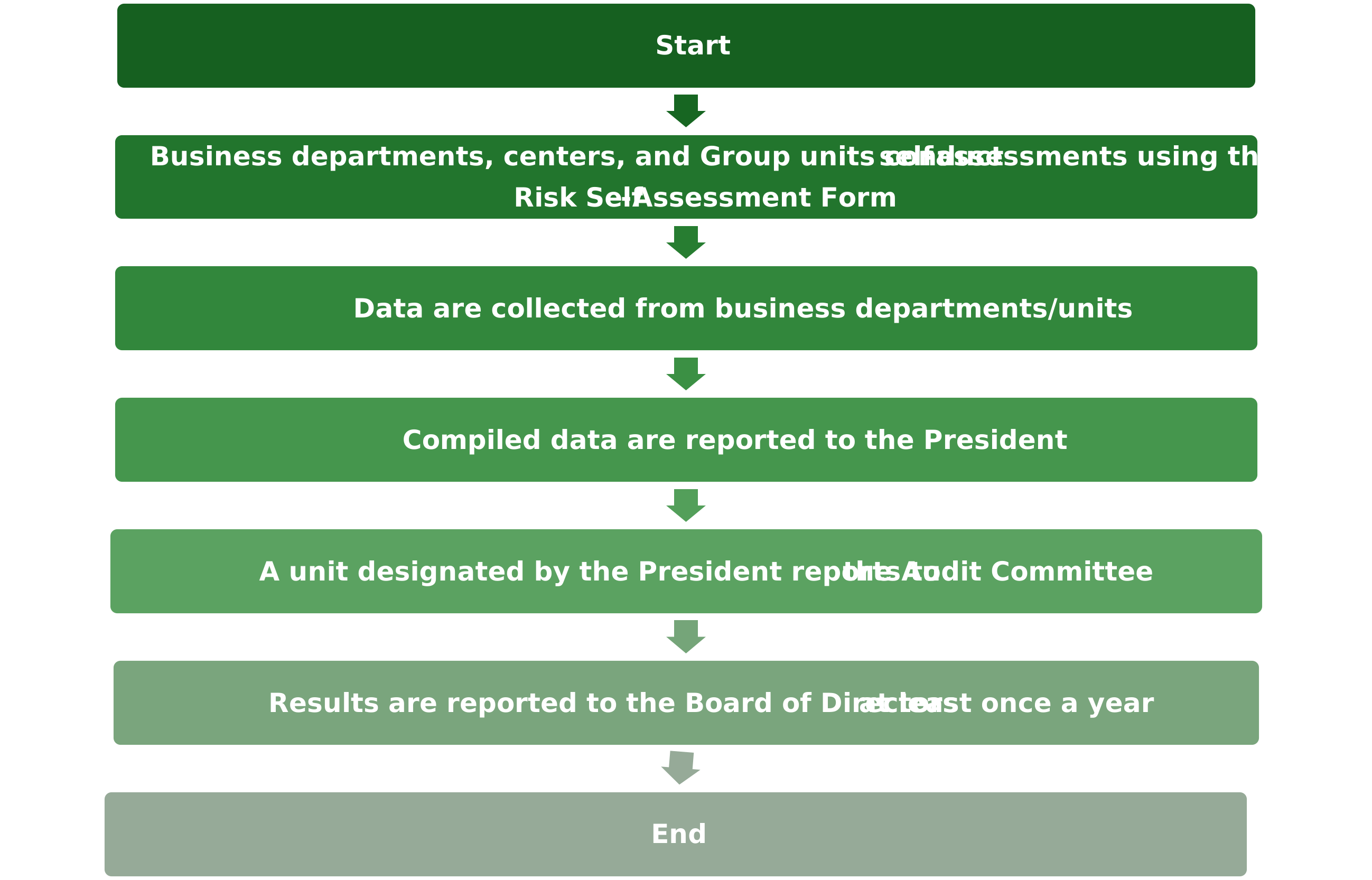
【Risk Self-Assessment Flowchart】
Climate-related Risk Management Process:
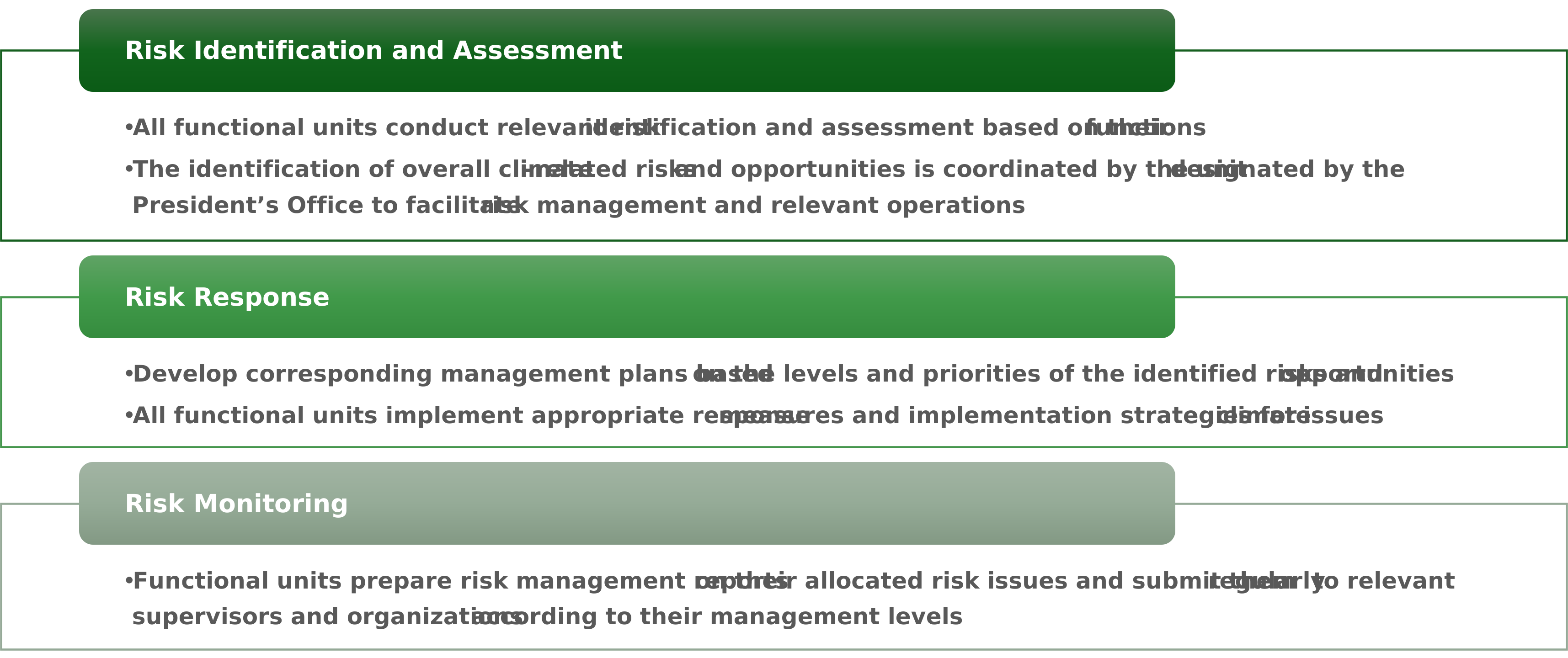
EMC’s climate-related risks are managed in accordance with the Company’s Risk Management Policy and Procedures. There are seven procedures for the Company’s risk management:
(1) Awareness Building
The Company shall proactively build risk management awareness and make dynamic adjustments in response to environmental changes. Advocacy meetings or education and training are conducted on a periodic basis to help all department heads and employees understand the Company’s risk management policy, processes, and risk identification procedures.
(2) Goal Setting
Goal setting is a prerequisite for risk identification, risk assessment, and risk response. All departments shall ensure that the risks to be taken for goal achievement are within the Company’s risk appetite when developing strategies and plans for business activities and setting various goals and targets.
(3) Risk Identification
Risk identification refers to the process of analyzing the Company’s operating environment and determining which events may occur and why they occur based on internal and external environmental variables. The Company’s departments are required to identify potential risk sources in their business activities, predict possible future risks based on past experience, categorize and regularly control identified risks, and make regular reports on the results of risk identification. If an unanticipated risk arises, they must report it immediately and take swift action to prevent the incident from causing significant damage to the Company.
(4) Risk Assessment
The Company’s departments are required to assess and analyze identified risk incidents based on actual conditions, consult various information to predict the possibility of the risk incidents, and determine the impact of their results on the Company. When conducting risk assessment, it is necessary to consider whether the current internal control measures can prevent risk incidents. The results of risk analysis must contain necessary information to serve as a basis for risk assessment and response. For quantifiable risks, more rigorous statistical techniques are used for analysis and management; for risks that are difficult to quantify, qualitative methods are adopted for assessment. Qualitative risk assessment uses descriptive terms to describe the likelihood of risk occurrence and the potential impact.
(5) Risk Response
Risk response focuses on developing plans and actions for risks that have already occurred. The formulated risk response plans and actions should include plan contents, responsible units, resource requirements, implementation timeline, monitoring and review mechanisms, and the cost-benefit analysis of the response plans. When necessary, interdepartmental collaboration is employed to jointly resolve risk incidents.
(6) Risk Monitoring
Risk assessments are conducted on a yearly basis. All business departments, centers, and Group units must complete the Risk Self-Assessment Form. The business department unit under the President's Office compiles the information and reports to the President on a yearly basis. In the event of new, unexpected, and high-impact risks, meetings should be promptly convened to conduct risk assessment and discuss response plans. Relevant forms and meeting minutes should be kept and filed as supporting documents.
(7) Information Disclosure
In addition to disclosing relevant information pursuant to the stipulations of competent authorities, risk management information should also be disclosed in annual reports, sustainability reports, or on the Company’s website.
【Risk Management Process】

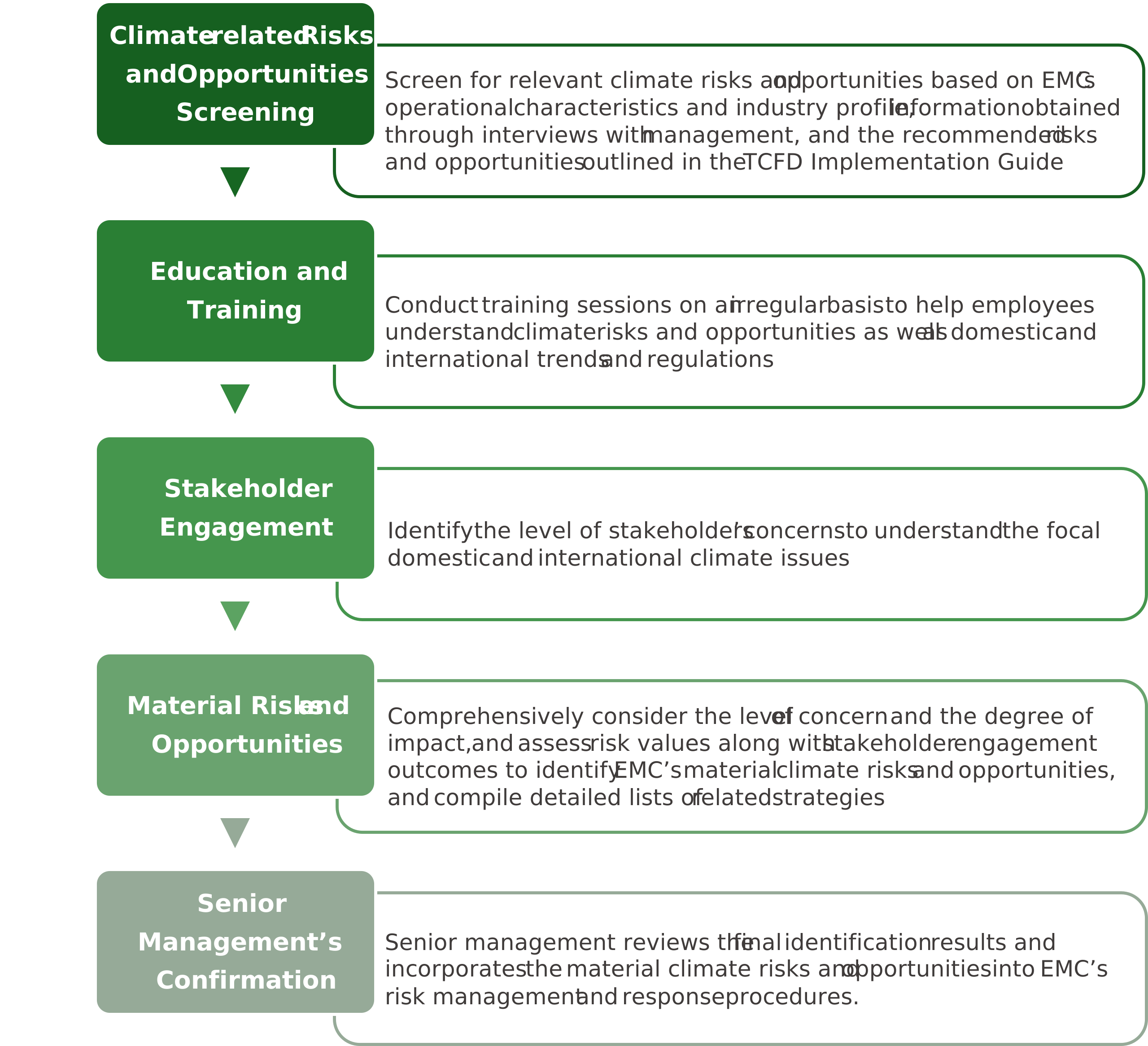
Climate Risk and Opportunity Identification Process:
By consulting the 2050 predictions revealed in the TCFD Implementation Guide, the Global Risks Report, and Taiwan’s regional climate change research reports, EMC identifies its material risks and opportunities likelihood on their possibility and potential impact, then assesses the impact of each climate risk and opportunity on its operations, strategies, and financial planning. The operational and financial impacts of issue scenarios on the organization are regularly updated, and relevant committees and teams formulate management measures for the material risks.
【Climate Risk Management Process】
【Climate Risk and Opportunity Identification Process】
In accordance with the timeline requirements stipulated in the TWSE’s Rules Governing the Preparation and Filing of Sustainability Reports by TWSE Listed Companies, the Company shall disclose inventory information in 2026, and shall set a base year no later than 2026 to disclose its reduction targets, strategies, and specific action plans for 2027. The Company has completed the GHG emissions inventory of its business units ahead of schedule, including the Taiwan plants: Guanyin Plant and Hsinchu Plant; the Mainland China plants: Elite Electronic Material (Kunshan), Elite Electronic Material (Zhongshan), and Elite Electronic Material (Huangshi); and the USA plant: Arlon EMD. EMC will continue to formulate its carbon reduction targets based on current conditions and circumstances.
【EMC’s GHG Emissions Statistics for the Past 3 Years】
|
Plant |
Taiwan Plants |
Mainland China Plants |
USA Plant (Arlon EMD) |
Total |
|||||||||
|
Year |
2022 |
2023 |
2024 |
2022 |
2023 |
2024 |
2022 |
2023 |
2024 |
2022 |
2023 |
2024 |
|
|
Category1 (Scope 1) |
(tCO2e/年) |
15,266.850 |
15,637.2609 |
14,276.3497 |
44,225.75 |
54,765.56 |
59,855.21 |
3,308 |
3,327 |
3,320 |
62,800.600 |
73,729.8209 |
77,451.5597 |
|
Category 2 (Scope 2) |
(tCO2e/年) |
24,272.123 |
20,083.5700 |
20,842.6504 |
73,213.84 |
82,796.08 |
94,935.38 |
780 |
874 |
817 |
98,265.963 |
103,753.6500 |
116,595.0304 |
|
Category 1+Category 2 (Scope 1+ Scope 2) |
(tCO2e/年) |
39,538.973 |
35,720.8309 |
35,119.0001 |
117,439.59 |
137,561.64 |
154,790.59 |
4,088 |
4,201 |
4,137 |
161,066.563 |
177,483.4709 |
194,046.5901 |
|
Total consolidated revenue (Unit: NT$ million) |
38,672.549 |
41,296.217 |
64,376.727 |
||||||||||
|
【Category 1 + Category 2】 Greenhouse gas emission intensity (tCO2e /per NT$ million of revenue) |
4.1649 |
4.2978 |
3.0142 |
||||||||||
|
Verification/Assurance Institution |
l BSI l CQC(Kunshan) l SAS(Arlon EMD) |
l BSI l SAS(Arlon EMD) |
l BSI l SAS(Arlon EMD) |
||||||||||
|
Verification/Assurance status |
Assurance statement obtained |
Assurance statement obtained |
Assurance statement obtained |
||||||||||
Note:
1. The above Category 1 and Category 2 inventory scope includes EMC’s Taiwan plants: Guanyin Plant and Hsinchu Plant; Mainland China plants: Elite Electronic Material (Kunshan), Elite Electronic Material (Zhongshan), and Elite Electronic Material (Huangshi); and USA plant: Arlon EMD. Location-based factors are used for Category 2 emissions calculations.
2. Different assurance agencies may adopt different rules for presenting decimal numbers and rounding values to different decimal places when disclosing GHG inventory data. The values presented in the table above are consistent with those indicated in the assurance statements issued in the corresponding years.
In consideration of factors such as the continuously growing production capacity, reasonable carbon reduction planning, trends in the PCB industry, and regional and international regulations, the Company has set 2023 as the base year and aims to achieve a 30% carbon reduction by 2030, with the ultimate goal of achieving net zero carbon emissions by 2050 in accordance with the government and international standards. Meanwhile, as indicated in the aforementioned carbon reduction targets, the Company aims to achieve a 25% carbon reduction by 2030 (relative to the 2023 base year) through the adoption of green energy. For detailed carbon reduction goals, targets, and results, please refer to Section Carbon Reduction Goals,Actions, and Achievements . For information about the use of renewable energy, please refer to Section Energy Use and Management .